 ThynkRise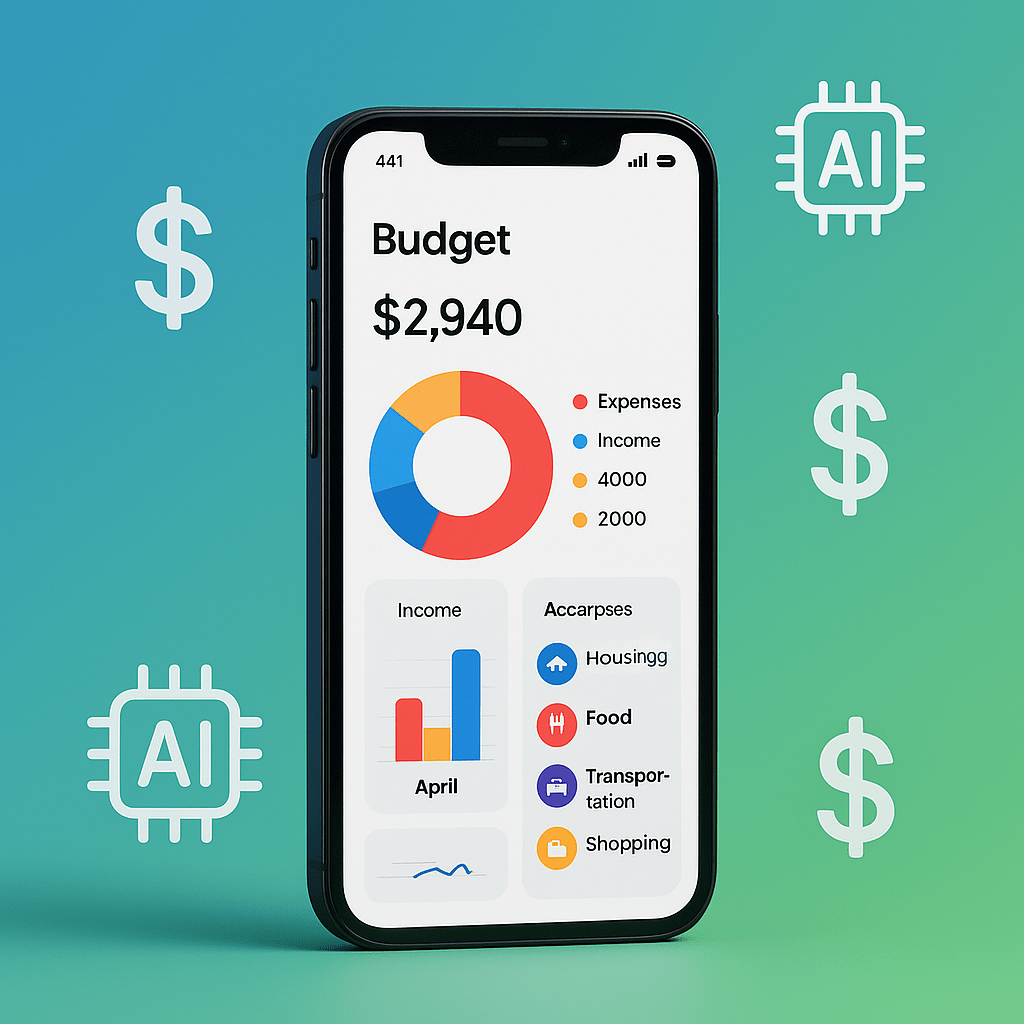
Manually tracking every dollar in a spreadsheet works right up until the week you stop doing it, which for most people is the second or third week. AI-powered budgeting apps solve the actual reason budgets fail: they don’t rely on you remembering to log anything. They pull transactions automatically, categorize spending on their own, and flag patterns you’d probably miss on your own — a subscription you forgot about, a category that’s crept up three months in a row, a bill that’s due before your next paycheck lands.
Why AI Changes What a Budgeting App Can Actually Do
Older budgeting apps were essentially digital ledgers — you still had to categorize every transaction and remember to check in. The AI layer in current apps does three things older tools couldn’t: it categorizes spending automatically and gets more accurate the longer you use it, it predicts upcoming bills and low-balance days before they happen instead of after, and it can answer plain-language questions like “how much did I spend on restaurants this month” without you building a report yourself. None of this replaces financial advice for complex situations, but for everyday spending awareness, it removes almost all the manual work.
What to Check Before You Pick One
- Account syncing: Confirm it connects cleanly to your actual banks and credit cards — smaller or regional banks sometimes have sync issues with newer apps.
- Budgeting style: Some apps use zero-based budgeting (every dollar assigned a job), others use simple category tracking. Pick the style that matches how you actually think about money, not the one with the most features.
- Security: Look for bank-level encryption and read-only account access — a legitimate budgeting app never needs the ability to move your money, only to see it.
- Cost: Many of these charge a monthly or annual subscription. Weigh that against what you’re realistically likely to save by using it consistently.
Apps Worth Trying in 2026
A few names come up consistently for good reason:
- Monarch Money — Strong for couples or households managing money jointly, with shared budgets and net worth tracking alongside day-to-day spending.
- YNAB (You Need A Budget) — Built around zero-based budgeting; steeper learning curve, but consistently rated highest for actually changing spending behavior, not just tracking it.
- Cleo — Uses a conversational, chat-based interface and leans harder into AI-driven nudges and spending call-outs than most competitors.
- Rocket Money — Especially strong at finding and canceling forgotten subscriptions automatically, on top of standard budgeting features.
- Copilot — Clean, visual interface with strong automatic categorization; iOS-only as of this writing.
What These Apps Can’t Do
An AI budgeting app can tell you that you’re overspending on dining out. It can’t tell you whether you should be maxing out a Roth IRA instead, or whether your specific mix of debt and savings goals makes sense for your situation. Treat these tools as a highly capable tracking and awareness layer, not a substitute for actual financial planning when the stakes are bigger than monthly spending — buying a house, changing careers, or planning for retirement all deserve more than an app’s default recommendation.
How to Actually Get Started
Pick one app, connect your primary checking account and main credit card, and give it two full weeks before judging whether it fits. The first few days are usually messy — categorization gets things wrong, and it takes time to correct it — but most of these tools improve quickly as they learn your actual spending patterns. Resist the urge to try three apps at once; the value comes from consistent use, not from finding the theoretically perfect one on day one.
Recommended Tool
Want to master this topic? Check out
CustomGPT.ai.
It’s a powerful solution built for exactly this use case.
We may earn a commission, at no extra cost to you — it never affects what gets recommended.
Conclusion
The best AI budgeting app is the one you’ll still be checking in three months, not the one with the longest feature list. Start with automatic tracking and categorization, and layer in more advanced features only once you trust the basics are accurate.
Are AI budgeting apps safe to connect to my bank account?
Reputable apps use read-only, bank-level encrypted connections (often through providers like Plaid) and cannot move money out of your accounts. Still, stick to well-established apps with a track record rather than obscure new entrants.
Do I need to pay for a budgeting app to get value from one?
Several offer usable free tiers, though the more advanced AI features — predictive alerts, deeper categorization, joint account handling — are often behind a paid tier. Try a free tier first to see if the app’s approach fits before upgrading.
Can an AI budgeting app replace a financial advisor?
No. It’s excellent for day-to-day spending awareness but isn’t built for complex decisions like retirement planning, tax strategy, or investment allocation.